
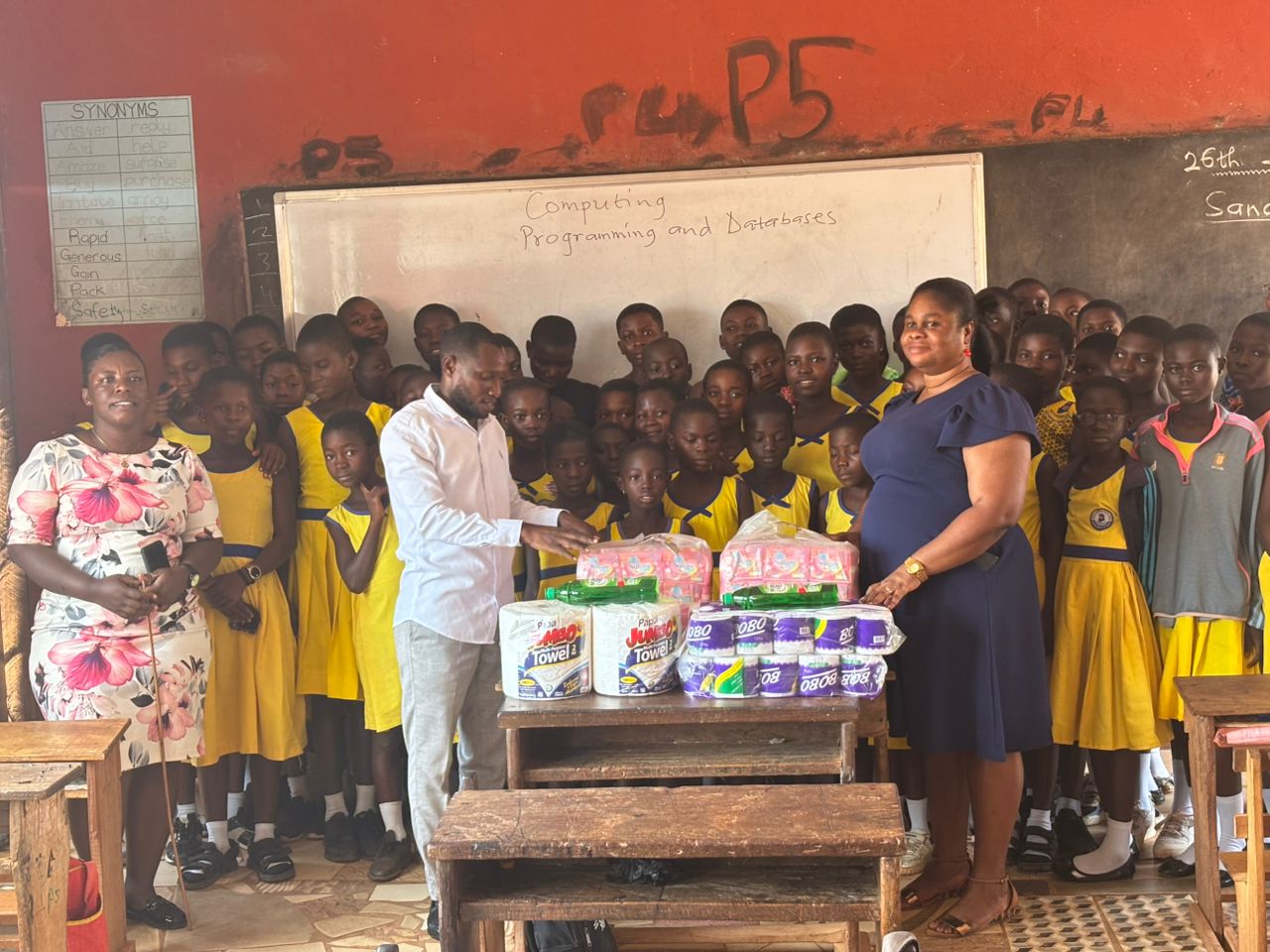
Dozens of adolescent girls at Ampia Ajumako Methodist School received sanitary pads and practical lessons on menstrual hygiene management on Tuesday, in an intervention officials say is aimed at keeping girls in classrooms during their periods.
The presentation, organised by the Ajumako Enyan Essiam District Directorate of the Ghana Education Service through its Girl Child Education Unit, targeted pupils who struggle to afford basic sanitary products in this rural farming community.
Madam Lydia Essuon, the District Girl Child Coordinator, told the gathering that girls across the district routinely turn to unhygienic substitutes old cloth, handkerchiefs, even toilet rolls because their families cannot afford pads. The result, she said, is predictable: girls miss school for days each month, fall behind in class, and in some cases become vulnerable to exploitation.
"The problem is not that our girls do not want to learn," Madam Essuon said. "It is that we have not made it possible for them to stay in school when they are menstruating."
That vulnerability has a darker side in the Ajumako-Enyan-Essiam District, where reports have surfaced of girls accepting money from men in exchange for sex simply to buy sanitary pads. The Girl Child Coordinator has previously warned that parents' refusal to provide pads for their daughters is directly linked to teenage pregnancy and school dropout in the area.
The District Education Director, Madam Sabina Aba Wilson, has consistently urged girls to avoid transactional relationships and has called on parents to treat sanitary products as a household necessity rather than a luxury. She has also encouraged girls to attend school during their periods without shame or fear.
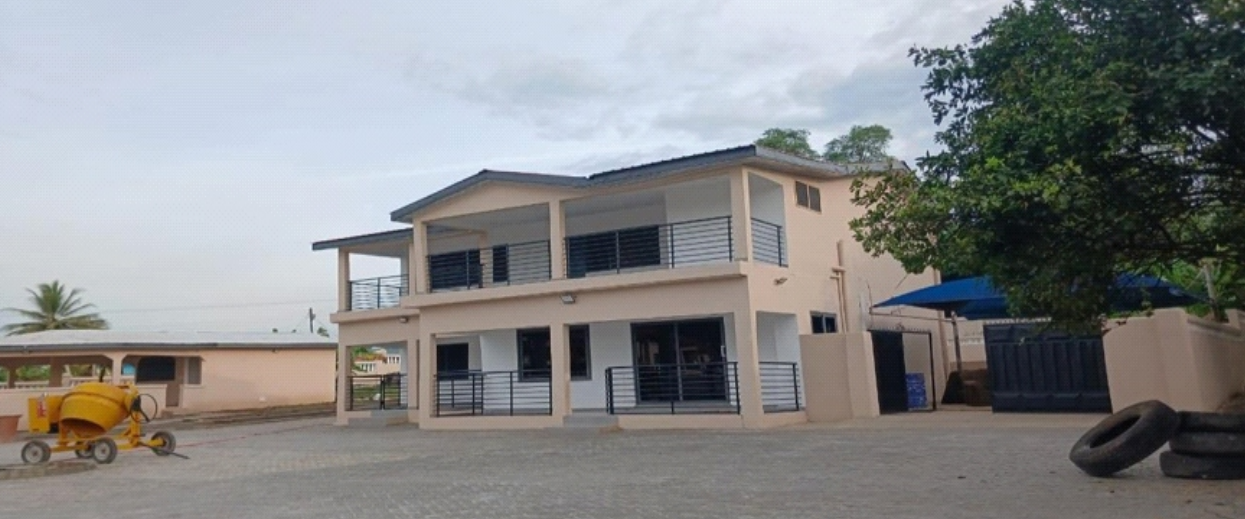
Ampia Ajumako Methodist School sits in the Ampia community within the Ajumako-Enyan-Essiam District and serves pupils from surrounding villages. The school has drawn community support before a philanthropist funded a new classroom block after concerns were raised about the safety of the old structures and Tuesday's presentation was welcomed by teachers who say absenteeism among adolescent girls spikes noticeably during menstrual periods.
Beneficiaries, some visibly relieved, said the pads would allow them to sit through lessons without the anxiety of staining their uniforms. Teachers reported that girls frequently stay home rather than risk embarrassment.
Officials from the District Education Directorate said the programme will be extended to other schools in the district, with priority given to rural communities where access to sanitary products is most limited. They called on the government, NGOs, and private individuals to support the effort, noting that many families in the district cannot absorb the monthly cost of pads.
The intervention forms part of broader efforts by the Ghana Education Service to promote menstrual hygiene management and ensure that menstruation does not become a barrier to girls' education.